Biography
About Annie Wells
Photo by Grace Walker
“Life brings great joy but also heartbreak sometimes, Wells says, “Writing, performing, and recording music brings only pure joy.”
Annie Wells shares joy through her music in venues large and small, house concerts and record stores across the northeast United States. Annie performs her own songs with some of the most renowned musicians including Mike Kaupa, trumpet (Glenn Miller Orchestra, Dave Rivello, Joe Locke, Ray Charles), Dave Arenius, upright bass (Herb Ellis, Archie Shepp), Phil Marshall, guitar (Colorblind James, La La Land), Tony Hiler, drums (Hanna and the Blue Hearts, Gian Carlo Cervone).
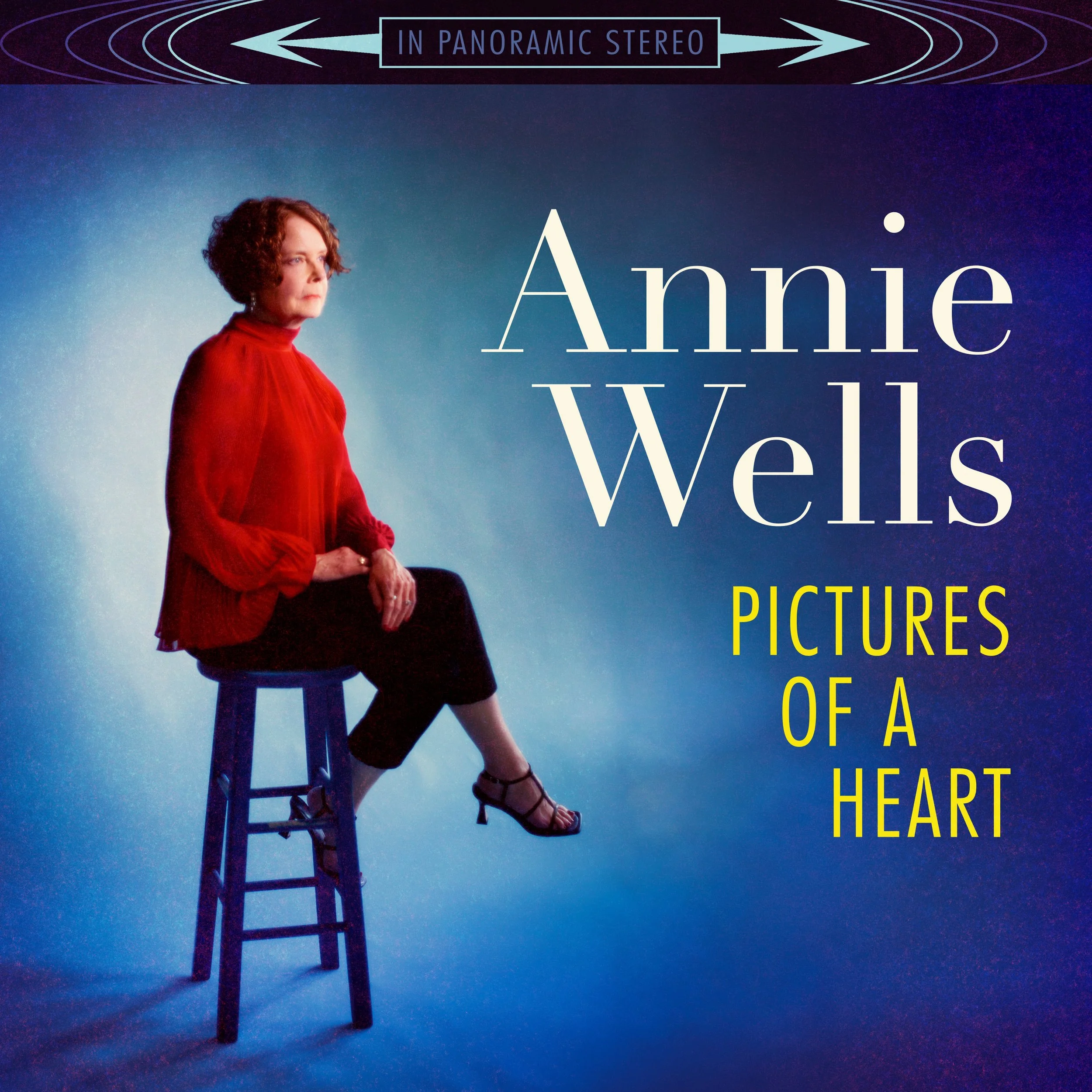
On her new album "Pictures of a Heart", Wells is backed by a rotating group of stalwart musicians that maintain an effortless groove. She has perfected a distinctive, sophisticated jazz-steeped sound. The album showcases a series of songs that explore themes of love, loss, betrayal and tragedy that all manage to uplift through their musicality inspired by an unerring belief in the transformative power of love. Each of the seven songs tells a different love story, but not in the way you’d expect. Wells shows us how love takes on many forms and meanings: from hard-won, enduring love in the first track, “True Blue Boy” to transcendent love, beyond mortality on the final track, “Blue Aeroplane”, written by her friend, David Ripton. She wrote five of the seven tracks and included the dreamy, “Radio Silence” by Christopher Earl Zajkowski.
All seven heartfelt songs were produced by Ken Frank. Appearing on the album are longtime musical collaborator Phil Marshall (Colorblind James, La La Land), with his spirited guitar work, Frank on electric bass, Dave Arenius on upright bass, Melissa Davies on cello, Mike Kaupa on trumpet and flugelhorn and Roy Marshall on drums.
Excerpt from an interview with Annie by The Further, March 2026:
My family’s stories often inspire my songs such as the time my Great Aunt Mary gave me her old Rambler station wagon in Ohio, and I drove it back to New York and wrote “Mary”. When my 4-year-old niece, Emma chased fireflies on a summer night, the experience brought me back to my own childhood memories in the song, “Fireflies”. My last single released in November, “Time Escaped” was written about the grief of family separation during the pandemic.
Resilience and staying true to your vision are recurrent themes. I wrote “Little Sparrow,” about Edith Piaf and “The Faraway” about artist Georgia O’Keeffe’s fascination with the Southwest. What really struck me about Piaf was her devotion to singing — no matter what was going on, the most important thing was singing. Georgia O’Keeffe left her New York City home and her husband, Alfred Stieglitz for six months each year to live and paint in the Southwest.
In times of frustration when I felt no one was listening; I kept on creating. In my song, “Beautiful Voice”, I wrote, “It doesn’t matter if nobody hears you, I hear you with my heart”. Even if you write, paint, or sing only for yourself, you give and receive the gift of the most treasured human expression.
Wells has six albums to her credit. The twin themes of loss and hope have been evident from the start. On her record, “Lonely Hearts Club”, Wells features a song about the Hitchcock character, Miss Lonely Hearts, in a touching sub-plot about a woman seeking love in the movie “Rear Window.” Her efforts to connect having failed, and in despair, Miss Lonely Hearts nearly swallows an overdose of pills, then hears a lonely musician’s beautiful song coming from an open window above. She and the man are together in the end.